Gran Canaria Travel Guide: Winter Escape to Maspalomas (Dunes, Roque Nublo, Las Palmas)
- Pause to Play

- Jan 5
- 8 min read
Is there a better feeling than leaving a grey, freezing winter behind — and stepping into eternal spring?
Gran Canaria isn’t just a beach destination. For me, it’s the perfect definition of Pause to Play: the profound silence of the dunes and the luxury of doing nothing (Pause) — balanced with steep cycling climbs, rugged mountain hikes, and open-ocean adventures (Play).
I’ve spent my time on the ground there — based in Maspalomas (Salobre), riding inland climbs until my legs burned, hiking up to Roque Nublo, taking the bus to Las Palmas for a proper city day, wandering the postcard lanes of Puerto de Mogán, and heading out from Puerto Rico to search for dolphins in the open Atlantic.
Think of this Gran Canaria travel guide as your personal hub — a content map that will lead you to the very best of this “miniature continent” without the overwhelm.

In short
Best base for winter: Maspalomas (easy access to coast + day trips + inland climbs)
Top 3 must-dos: Maspalomas Dunes • Roque Nublo • Puerto de Mogán (or Dolphins from Puerto Rico)
Car needed? Optional — great for mountains; not required for Las Palmas day trips
Best for: cyclists, hikers, winter escapists, and anyone craving sunlight + movement
Table of Contents
1. Quick Trip Planner (Gran Canaria Travel Guide)
Best For: Winter escapists, road cyclists, hikers, and anyone needing a serious
Vitamin D boost.
My Base: Salobre Hotel Resort & Serenity and Apartamentos Buganvilla (Adults Only) - Maspalomas area
Getting Around:
To the Capital: The Global Bus network (blue buses) is fast, reliable, and comfortable for day trips to Las Palmas.
To the Mountains: Renting a car is recommended if you want to reach trailheads like Roque Nublo on your own schedule.
Top 3 "Need to See":
Maspalomas Dunes at sunrise or sunset.
Roque Nublo (The Cloud Rock).
Puerto de Mogán harbor.

2. The Base: Where to Sleep
I tested two very different bases in the south: one for a full reset (Salobre) and one for an effortless, coast-close routine with an ocean view (Buganvilla).
Salobre Resort
Where you sleep defines the rhythm of your trip. I wanted to be close to the Maspalomas coast but far enough away to hear my own thoughts. I chose Salobre Hotel Resort & Serenity.
Carved into the rocky canyons, it feels like a secret hideaway. Unlike the crowded beach hotels, here you are surrounded by silence, rugged landscapes, and green golf courses.
Best for: a true reset, quiet mornings, pool time, and “Pause” days between hikes/cycling.
The vibe: absolute “Pause.”
Highlight: the rooftop “Sunset” pool. Watching the sky turn purple after a day of cycling is a core memory from this trip.
👉 [Review: Why Salobre is the ultimate hideaway – Coming Soon]
I also spent part of the trip at Apartamentos Buganvilla (Adults Only) in the Maspalomas area — and honestly, the apartment itself was unbelievably beautiful. It’s self-catering, so you’re on your own for breakfast and dinners, but the trade-off is worth it: a breathtaking ocean view that makes even a simple morning coffee feel like a ritual. It’s a perfect coast-close base for easy evening walks and low-effort days when you just want the island to feel effortless.
Best for: an easy, flexible routine, ocean-view mornings, and a simple base close to the coast.
Good to know: self-catering (plan groceries or quick go-to spots nearby).
👉 [Apartamentos Buganvilla (Adults Only) — Quick Notes – Coming Soon]
3. History, Culture & City Life (Las Palmas highlights)
Don't stay only in the south! The capital city, Las Palmas de Gran Canaria, is a vibrant cultural hub. I took the bus north to explore. To really understand the layers of this city, I booked a City Tour via GetYourGuide, which I highly recommend for a stress-free deep dive.
Vegueta: We walked the cobblestone streets of the old town, admired the Cathedral of Santa Ana, and soaked in the colonial history. It feels like stepping back into the 15th century.
Las Canteras: In contrast, the city’s main beach is pure modern energy—surfers in the water, digital nomads in cafes, and locals enjoying life.
👉 Las Palmas City Guide: Vegueta & Canteras - READ THE FULL ARTICLE

4. Coastal Gems: Puerto de Mogán & Dolphins from Puerto Rico
The southern coast offers two very different experiences: aesthetic calm and wild adventure.
Puerto de Mogán: Often called "Little Venice," this is the most photogenic town on the island. White houses with colorful borders, arches draped in bougainvillea, and canals. Perfect for a slow afternoon coffee by the marina.
U-Boot in Mogán: If you want something a little different, the submarine tour from Puerto de Mogán is a fun, low-effort way to see the ocean from another perspective. You descend below the surface, watch the light fade, and suddenly the underwater world feels quiet, cinematic, and strangely calming — a very literal version of “Pause.”
Ocean Safari (Puerto Rico): I went to Puerto Rico (the town) for one reason: Dolphins. I boarded a boat to search for them in the wild. Seeing a pod jumping alongside the boat in the open Atlantic was pure, unfiltered joy.
👉 Read more about the Coastal Gems here - READ THE FULL ARTICLE
5. Nature & Easy Walks (Maspalomas Dunes & Charca)
You don’t always need hiking boots to experience the drama of nature here.
Dunas de Maspalomas: This is the icon of Gran Canaria. Walking through this vast nature reserve of sand dunes at sunrise feels like a trip to the Sahara. The shifting sands against the blue ocean are mesmerizing.
La Charca: A protected lagoon right next to the dunes and the historic lighthouse (El Faro). It's a peaceful spot for a gentle stroll and birdwatching.
6. Hikes in Gran Canaria
Gran Canaria is a miniature continent, and the interior is a hiker's dream.
The Icon: You cannot miss the hike to Roque Nublo (Cloud Rock). It is a sacred natural monument. The hike is relatively short but offers a view over the clouds that makes you feel incredibly small.
The Terrain: Be prepared for volcanic rock, pine forests, and steep ascents.
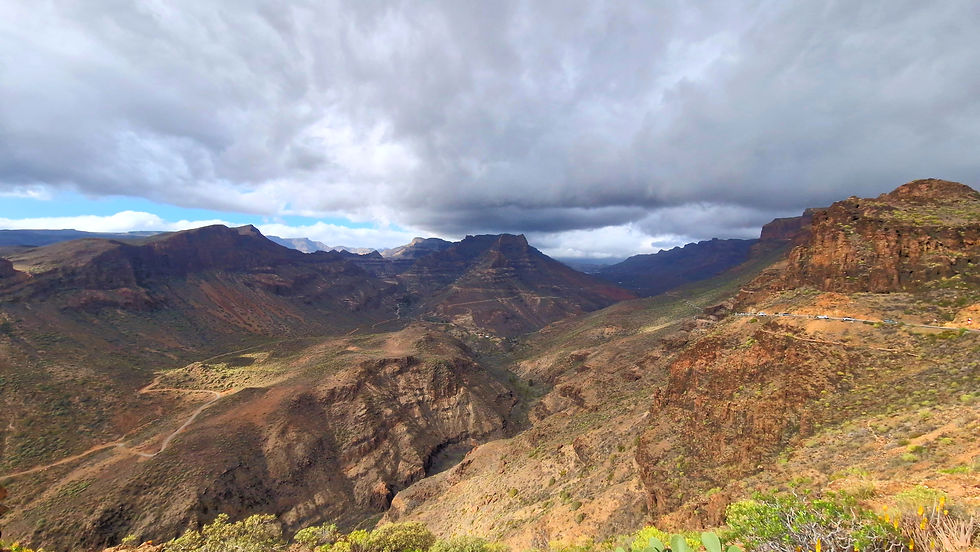
👉 [My Favorite Hikes in Gran Canaria – Coming Soon]
7. Biking & E-Biking (coming soon)
The island is a world-famous destination for cyclists. From the Valley of Tears to coastal rolls – full guide coming soon.
👉 [My Favorite Bike routes in Gran Canaria – Coming Soon]

8. Gran Canaria with Kids
While my trip focused on active exploration, Gran Canaria is very family-friendly.
Beaches: Amadores and Anfi del Mar offer calm, wave-free waters perfect for swimming.
Activities: The dolphin watching trips from Puerto Rico are a hit with children, as is the Poema del Mar aquarium in Las Palmas.
👉 [Gran Canaria Family Guide – Coming Soon]
9. Gran Canaria with Dogs (coming soon)
Traveling to the islands with a dog requires some logistics. Full guide on flights, ferries, and dog-friendly beaches coming soon.
10. Rainy Days
Even in paradise, it rains. Best museums, shopping, and indoor spots.

11. Best Time to Visit Gran Canaria
I visited during the deep European winter, and it was the best decision. While the continent freezes, Gran Canaria offers eternal spring with temperatures around 20-25°C.
Winter (Dec-Feb): Perfect for hiking and cycling. Not too hot, but warm enough for the pool.
Summer (Jun-Aug): It gets hot, especially inland. Better for beach lovers.
12. FAQ
Do I need a car in Gran Canaria?
Not always. If you’re based in Maspalomas and your plan is dunes + coastal days + Las Palmas by bus, you can skip it. But for mountain trailheads (like Roque Nublo) and maximum cycling freedom, a rental car makes everything easier.
How do I get to Las Palmas from Maspalomas?
Do I need a reservation for Roque Nublo?
In 2025, access management rules were introduced to reduce crowding, and reservations can be required during certain hours (commonly between 09:00–17:00 depending on the system in place). Check the current rules before you go and plan transport accordingly.
How do I check sea conditions and beach flags?
Use the official Canary Islands safe-bathing guidance (flags + sea conditions):
Is the water warm in winter?
It’s refreshing — not tropical. In January, the average sea temperature around Gran Canaria is about 20°C, with typical ranges roughly 18.6–21.7°C depending on location and conditions.
Is Gran Canaria safe for tourists?
Generally, yes. Violent crime is rare, but like in any tourist destination, petty theft can happen in busy areas. Use normal precautions (bags closed, valuables not on display).
Are beaches always safe for swimming?
Not always. Coastal waters can be dangerous on rough days — follow beach flags (green/yellow/red/black) and avoid risky spots when warnings are posted.
Is Gran Canaria windy in winter?
It can be — the Canary Islands are shaped by the trade winds, and you’ll feel it most on open promenades, boat trips, and exposed viewpoints. Pack a light windbreaker (especially for the ocean and mountain descents).
Best time for Maspalomas Dunes: sunrise or sunset?
Sunrise for quiet, cooler sand, and soft light. Sunset for golden tones and an easy “end-of-day ritual.” If you want the most “I escaped winter” feeling: go at sunrise.
Are dolphin sightings guaranteed from Puerto Rico?
No — and that’s the point. Wildlife is wild. Choose an operator that respects marine-life distance rules and doesn’t promise guaranteed sightings.
Where should I stay: Maspalomas or Las Palmas?
For a winter escape built around dunes, cycling, day trips, and easy recovery days: Maspalomas. If you want culture and city life as your main vibe: Las Palmas (or do it as a day trip from the south).
How many days do I need for Gran Canaria?
3 days = the highlights (dunes + one big “Play” day + city or dolphins).
5 days = the sweet spot (add Mogán + a recovery day).
7 days = best balance (2 active days + 2 slow days + ocean + city).
What should I pack for this kind of trip?
Layers. A windbreaker (coast + boat), a warmer layer for Roque Nublo altitude, sun protection, and shoes that work for sand + pavement. For cycling: bring something for cooler descents.
Is Poema del Mar worth it with kids?
If you want one “rainy-day / family” win in Las Palmas, it’s a solid choice. Official “Plan your visit”: https://poema-del-mar.com/plan-your-visit
Have you been to Gran Canaria? Did you choose "Pause" by the pool or "Play" in the mountains? Let me know in the comments!
You may also like:


Comments